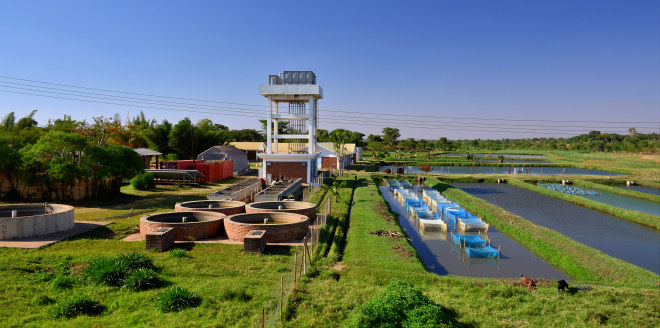
Solar powered tilapia hatchery, Malawi
Introduction
Traditionally, Malawi is a fish-eating nation. However, what is left
on the table is mainly maize mush, traditionally called Nsima.
Although Malawi is blessed with the ninth largest lake in the world
and the third largest and second deepest lake in Africa, overfishing
resulted in the collapse of the tilapia fishery in the lake since
the beginning of the 90th. Tilapia-like species, specifically
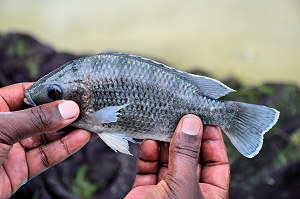
Oreochromis karongae, known locally as chambo, are the country’s favourite fish. Owing to the Chambo scarcity on the market, its
wholesale price has risen from 2.5 Malawian kwacha (MK) per kilo in
the early 1990s to 130 MK per kilo in 2002. Today, the price has
reached recently more than 3000 – 6000 MK (corresponding to about
US$ 4.00-8.00) per kilo which is hardly affordable to the most
Malawian people. The historical yields of 70% of
Chambo in the nets has turned into only 3–5% Chambo today, with
small fish called Usipa (Lake Malawi
 sardine, Engraulicypris
sardella) being the most prominent fish in the catches from Lake
Malawi providing at present 70% of the yield.
sardine, Engraulicypris
sardella) being the most prominent fish in the catches from Lake
Malawi providing at present 70% of the yield.
Under these circumstances, aquaculture is being considered as one of the measures to provide more Chambo on the table and for the market, however, the production in the country is still small and in general not efficient. Aquaculture has a tradition of about 100 years in Malawi, introduced while England was ruling Malawi, taking off with about 60 ponds in the 1950s and is represented today with about 6000 active fish farmers. At present, about 3600t of tilapia-like species are being annually produced from the rural farmer. One of the major bottlenecks for smallholder farmers to improve their yield is the scarcity and unreliable of sufficient viable fingerlings, specifically from Chambo.
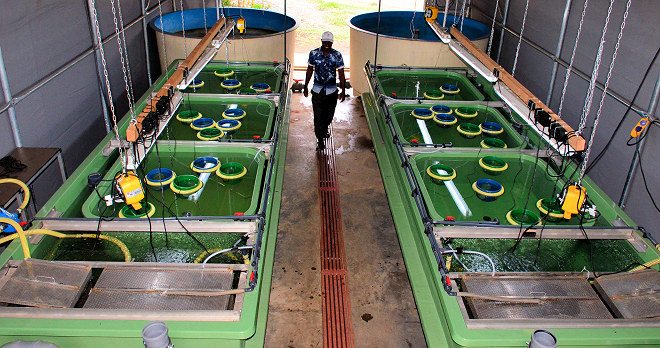
Thus, the "ICH LIEBE FISCH" project has established a specialized solar powered hatchery and optimized rearing protocols, in order to improve the sustainable supply of fingerlings for ongrowing farms of a high valued endemic fish species in combination with the introduction of aquaponics and integrated agriculture-aquaculture production methods.
The following information provides details on th operation of the solar powered hatchery at he farm of the Bunda Campus, which is part of the University of Lilongwe (LUANAR) with the department of fisheries and aquaculture.